An injury can change ordinary routines in ways you notice every day. Walking longer distances may drain your energy. Stairs can feel slower. Lifting, bending, reaching, driving, working, or returning to exercise may expose weakness that wasn’t there before. Our active rehab in Surrey BC focuses on rebuilding the physical abilities those everyday tasks demand through planned movement and progressive exercise.
Hyland Physiotherapy And Wellness begins by looking at how your body currently moves. We consider your injury history, current limitations, strength, mobility, endurance, coordination, and the activities you want to regain. That gives us a practical starting point instead of pushing you into exercises that don’t match your present ability.
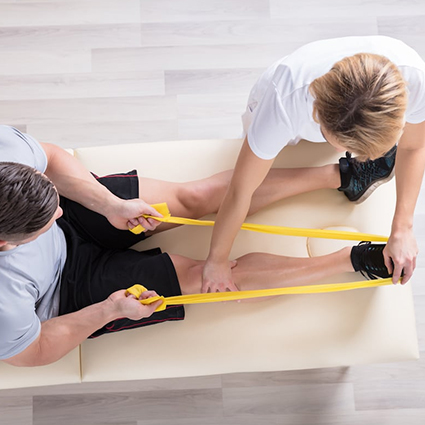
Our approach keeps you involved throughout recovery. You’ll practice movements designed to improve what has become difficult after an accident, strain, injury, or period of reduced activity. Exercises can be adjusted as your ability changes, allowing your program to keep moving forward with you. Recovery becomes easier to understand when you can see what you’re working toward. Each exercise has a purpose connected to movement, strength, control, stamina, or function that matters outside the clinic.
Active rehabilitation becomes especially important when the initial injury has settled, but your body still isn’t ready for normal physical demands. Lingering weakness, stiffness, poor endurance, reduced coordination, and guarded movement can make returning to work, sport, recreation, or household tasks harder than expected.
Our active rehab in Surrey BC can be useful when your recovery involves physical limitations such as:
Through active rehabilitation in Surrey BC, we build exercise around the movements your body needs to handle again. That may involve controlled strengthening, mobility work, balance tasks, endurance training, coordination drills, or functional movements connected to your normal routine.

A stronger body needs more than isolated repetitions. Your exercises should help you move with better control during the activities that matter to you. Our active rehab in Surrey uses progressive exercise to help turn regained strength into practical physical ability.
Your program may work on areas such as:
During active rehab in Surrey BC, progress is checked as your exercises become easier or your physical demands increase. We can change resistance, repetitions, movement range, exercise difficulty, or task complexity based on how you’re performing.
You may also receive exercises to complete between appointments. Consistent practice gives your body repeated exposure to the movements it needs to relearn, helping you build capacity gradually instead of depending only on what happens during clinic visits.

One of the hardest parts of injury recovery can be knowing what your body is ready to do. You may feel capable during lighter activities, then notice fatigue, stiffness, weakness, or poor control when the demand rises. That uncertainty can affect how you move at work, how long you stay active, and how confidently you return to previous routines.
We keep your rehabilitation connected to clear physical goals. If lifting is difficult, exercise can develop the strength and movement pattern needed for lifting. If your stamina drops quickly, your program can gradually increase physical tolerance. If returning to running or sport is the goal, your exercises can build the strength, control, and coordination required for those movements.
Hyland Physiotherapy And Wellness uses active rehab in Surrey to help you become an active participant in your recovery. You learn what you’re practicing, how it relates to your limitations, and how progress can be built through steady repetition. Wear comfortable athletic clothing and supportive footwear so you can move freely during your appointment.
Bring your recovery goals with you, whether that means handling a full workday, walking farther, returning to the gym, running again, or simply completing everyday physical tasks with greater ease. Book your active rehab assessment with Hyland Physiotherapy And Wellness and start rebuilding the strength, mobility, endurance, and movement control your routine requires.
Coming back from injury can make you second-guess certain movements. We use active rehab to help you practice them in controlled steps. Each successful repetition rebuilds trust in your body and makes physical activity feel less intimidating over time.
At our active rehab clinic in Surrey BC, we watch how you perform each exercise, not just whether you finish it. Small corrections can reduce compensation, improve movement quality, and help you understand how to use your body more efficiently.
Recovery rarely feels identical every session. When soreness, fatigue, or confidence changes, we can scale exercise difficulty without losing the purpose of your program. That keeps active rehab practical, steady, and easier to continue through the normal ups and downs.
Yes, core stabilization can be part of active rehab when trunk control supports stronger movement. Your core helps manage force as you bend, turn, lift, reach, and change direction, so poor control can affect how the rest of your body works during activity. Active rehab may use controlled exercises that train your trunk to stay steady while your arms and legs move. The goal is not simply doing harder abdominal exercises. It is learning to create support during movements that matter outside the clinic. With Hyland Physiotherapy And Wellness, core stabilization can be included within a movement-based program when it matches your assessment findings and goals. Once that control improves, flexibility may become another important part of restoring comfortable movement.
Yes, flexibility can be included in active rehab when restricted movement limits how comfortably or efficiently you perform an activity. Flexibility work is useful when it has a clear purpose, such as helping you reach a position, move through a fuller range, or perform an exercise without unnecessary restriction. Active rehab does not treat flexibility as a stand-alone goal for everyone. It can be combined with strength and control so the movement you gain is also usable. That matters because being able to reach a position and being able to control that position are different things. As mobility improves, active rehab can then look at how posture influences those movement options, especially during repeated sitting, standing, reaching, or other positions.
Yes, active rehab can address postural issues when they affect movement, muscle use, or tolerance for repeated positions. Postural correction is not about forcing your body into one rigid “perfect” position. In active rehabilitation, the focus is on how you hold and move your body during real tasks, then building strength and control needed to manage those positions. Exercises may help you become aware of movement habits and practise alternatives that feel steadier during activity. This can be relevant when certain positions repeatedly load the same areas or make movement less efficient. Once posture and movement control improve, the next step may involve conditioning so your body can maintain better form for longer periods without tiring as quickly during activity.
Yes, active rehab uses strength and conditioning with a rehabilitation purpose rather than treating every exercise like a general fitness workout. The exercises are selected around what your body needs to recover, such as improving capacity in a movement that became limited after injury. Resistance, repetitions, and exercise type can be chosen to match your current ability and demands you need to handle. This makes the work more focused than simply repeating a standard gym routine. When people receive active rehab therapy in Surrey BC, the aim is to rebuild useful physical capacity through planned exercise that connects with recovery goals. As your conditioning improves, the program can become more specific to movements required in sport, recreation, or another pursuit.
Yes, active rehab can include sport-specific exercise when your goal involves returning to movements that regular strengthening does not fully prepare you for. Sports often require combinations of speed, direction changes, balance, coordination, force, and repeated effort. A sport-focused rehab program can gradually introduce exercises that resemble those demands while respecting your current capacity. The point is not to copy an entire practice session inside the clinic. It is to prepare your body for the physical qualities your activity requires. At Hyland Physiotherapy And Wellness, sport-specific performance work is listed within active rehabilitation. Building those qualities in stages can help expose remaining weaknesses before full return, which naturally leads into the role active rehab may play in reducing re-injury risk.
Yes, active rehab can help reduce re-injury risk by improving abilities that may still be lacking when you return to demanding activity. A person can feel better before strength, coordination, balance, or conditioning has fully caught up. Structured exercise gives those areas time to improve before the body is exposed to higher demands again. Active rehab can make weaknesses easier to notice because your movement is challenged in a planned setting rather than tested unexpectedly during work or sport. Re-injury prevention is never an absolute guarantee, since many factors affect injuries. Still, preparation can make your return more informed and controlled. That leads to an important final point: active rehab is rehabilitation first, even when some exercises resemble a workout.
Active rehab is more structured than returning to your usual workout because every exercise should connect to a recovery need or functional goal. A fitness program may focus on general strength, endurance, or performance. Rehabilitation starts from what has changed after injury and builds from there. Exercise choice, difficulty, and progression should reflect your movement capacity rather than where you were before the setback. For people considering active rehab services in Surrey BC, that structure can make each exercise easier to understand because it has a clear role in restoring function. As capacity returns, the program can move closer to the demands of exercise, sport, or recreation. The purpose remains practical: prepare your body for activities you want to resume safely.