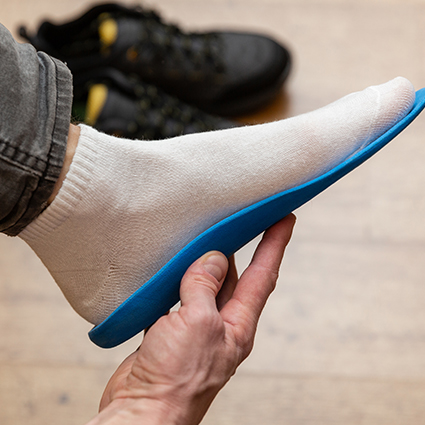
A long day can feel very different when every step keeps calling attention to your feet. With custom foot orthotics in Surrey BC, we use a 3D digital laser scan to record the shape of your feet and help us review how your feet support you while you stand and move. That scan gives useful information for making inserts that support foot and ankle alignment and distribute pressure across the foot.
Orthotic needs often become noticeable through repeated heel discomfort, arch fatigue, foot and ankle soreness, flat feet, or overpronation. These issues can make standing through work, walking through a store, exercising, or staying on your feet for long periods harder to manage comfortably. Your footwear also matters. An orthotic has to sit properly inside the shoes you use, support the right areas, and feel practical enough for regular wear.
At Hyland Physiotherapy And Wellness’ custom foot orthotics in Surrey are made using information from your foot scan and review of lower-body mechanics. You receive support built around the recorded shape of your feet, with fitting follow-up once the inserts are ready.
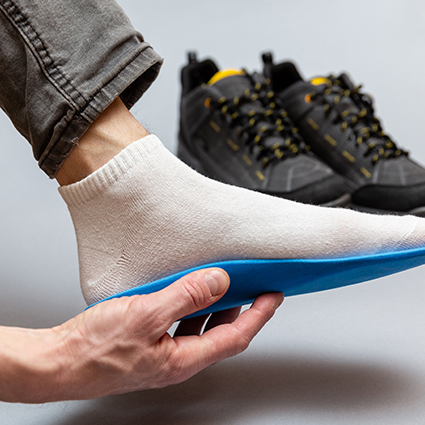
People often consider custom foot orthotics in Surrey BC, when foot mechanics begin affecting ordinary movement. Repeated pressure can change how comfortable each step feels, while overpronation or reduced arch support may influence the way force travels through the lower body. Over time, those patterns may be linked with discomfort beyond the foot itself.
Custom orthotic support may be considered for concerns such as:
These concerns can show up during work shifts, errands, walking, running, or other routines that place repeated load through the feet. The practical goal is to give the feet a more suitable base inside footwear and spread pressure more appropriately.
When we prepare custom orthotics in Surrey BC, the 3D scan gives us a detailed record of your foot shape. That information helps guide where the insert needs contact, support, and pressure distribution for day-to-day use.
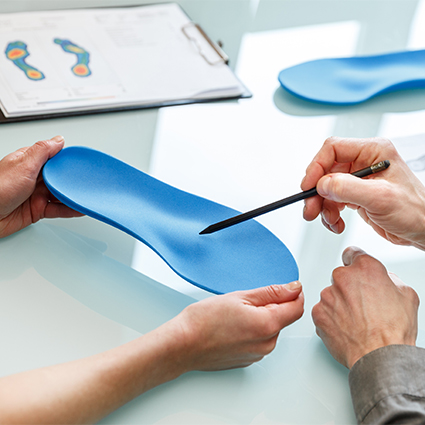
Your orthotic process starts with a digital record of your feet. Our 3D laser scanning captures the contours needed to help create inserts around your foot shape and lower-body mechanics. The result is a made-for-you orthotic designed for practical use inside suitable footwear.
The process follows a clear sequence:
That fitting stage matters because the insert has to work with your actual shoes and feel usable during your normal routine. Small fit changes can affect how the orthotic sits, where it makes contact, and how comfortable it feels during repeated wear.
With custom foot orthotics in Surrey BC, you get a scan-based insert followed by a fitting process that checks how the finished pair works for your feet and footwear.
The value of an orthotic shows up in ordinary moments. It may be standing through a full shift with more suitable support under your feet, walking longer without the same pressure building in one area, or wearing shoes with an insert shaped from your own foot scan. Those details matter because orthotics spend their useful life inside the footwear you depend on.
Hyland Physiotherapy And Wellness uses 3D digital scanning to capture the shape of your feet before your inserts are produced. Once your pair is ready, we arrange a fitting and can make changes when needed. This gives the finished orthotics a practical final check before they become part of your regular footwear.
For people seeking custom foot orthotics in Surrey, booking starts the process with a foot scan and a review of the mechanics relevant to your orthotic needs. Call (604) 208-5005 or visit 6678 152 St, Unit 104, Surrey, BC to arrange your appointment.
Your left and right feet can have different contours, pressure patterns, and support needs. We account for each foot separately. Your orthotics reflect those real differences instead of treating both sides as though they are exactly the same naturally.
For people seeking custom orthotic insoles in Surrey BC, we focus on purposeful support rather than simple softness. The goal is to give your feet structured contact inside footwear. This helps the inserts work as supportive devices instead of basic cushioning.
We explain what your orthotics are intended to support, how they should feel, and what changes may take time. You leave knowing what the inserts are designed to do, rather than predicting whether every ache should disappear immediately after wear.
Most people do best when they build wearing time gradually over several days. Custom foot orthotics can feel unfamiliar at first because your feet are meeting support in places that may not have had it before. Begin with shorter periods during normal daily activity, then add more time as your feet settle into the new feel. A sense of firmness or awareness can be normal early on. Strong pain, skin irritation, numbness, or soreness that keeps increasing is different and should not be pushed through. Hyland Physiotherapy And Wellness recommends paying attention to how your feet respond from day to day. A gradual start gives you a clearer sense of comfort without asking your feet to adjust all at once.
You can move one pair between shoes, but each shoe may hold an orthotic differently. Internal depth, width, heel shape, and the original shoe liner can change how much room is available around your foot. A pair that feels comfortable in walking shoes may feel crowded in slimmer footwear. Once you know which shoes work well, moving the inserts between those pairs can be practical. People choosing custom made orthotics in Surrey BC often benefit from thinking about the footwear they use most during work, errands, and walking. Keeping the orthotic flat and secure inside each shoe helps avoid bunching or unwanted movement. This makes use easier and prevents the insert from becoming an awkward extra layer inside unsuitable footwear.
Yes, custom foot orthotics can often be worn during exercise once regular walking feels comfortable. Start with shorter activity periods so you can notice how the inserts behave during faster movement, repeated steps, and changes in direction. Running, gym work, court activity, and long walks can place different demands on the foot and shoe. An insert that feels fine during casual use may feel different when pace and loading increase. Watch for sliding, rubbing, heel lift, or pressure that appears only during exercise. Increase activity time gradually when the orthotics continue to feel steady. This step follows naturally after finding shoes that hold the inserts well, because secure footwear helps the orthotics stay in place while your activity level rises.
Yes, you can travel with custom foot orthotics without changing your normal routine much. Keep them inside the shoes you plan to wear most, or pack them flat where luggage cannot bend or crush them. If you bring several pairs of shoes, use the orthotics only in pairs where they sit securely and leave enough room for your feet. Travel can mean longer airport walks, sightseeing, standing, and unfamiliar daily schedules, so consistent use may feel more practical than leaving the inserts behind. Keep them away from direct heat, wet bags, and tightly packed items. After using orthotics during exercise and daily walking at home, traveling with them becomes another simple part of keeping your usual daily foot support available.
Clean custom foot orthotics gently so their surface and shape stay in good condition. Wipe them with a soft damp cloth and a small amount of mild soap when needed, then let them air dry fully before returning them to your shoes. Avoid washing machines, dryers, heaters, and hot water because high heat can affect some orthotic materials. If your shoes become wet, remove the inserts and dry them separately instead of leaving moisture trapped underneath. Regular care also lets you notice loose coverings, surface damage, or areas that are becoming worn. After travel or heavy daily use, a quick clean is especially useful. An orthotics clinic in Surrey BC can assess inserts when their condition starts to change noticeably.
Visible wear and a change in feel are common signs that custom foot orthotics may be aging. Look for flattened cushioning, cracks, peeling covers, worn edges, or areas that have become thinner than before. You may also notice the inserts starting to shift, squeak, or feel less stable inside shoes that previously worked well. Because wear happens slowly, it is easy to get used to small changes without noticing them. Checking both inserts side by side every so often makes uneven wear easier to spot. Cleaning them regularly, as described above, also gives you a chance to see these changes early. Wear does not always mean immediate replacement, but clear damage or a major change in feel deserves closer attention.
Custom foot orthotics should be replaced when wear, foot changes, or daily use makes the old pair less suitable. There is no single replacement date for everyone because lifespan depends on how often the inserts are worn, the activities you do, the shoes you use, and how quickly the materials break down. Changes in foot size or shape can also affect whether an older pair still feels right. The wear signs from the previous step give you useful clues, especially when several appear together. Hyland Physiotherapy And Wellness can help you decide when an older pair has reached the end of useful wear. Replacing orthotics based on their condition keeps you from relying on inserts that no longer feel dependable.